Showing posts with label Media. Show all posts

Saturday, November 15, 2014

Watching Late Night Talk Shows for News: Focus on The Colbert Report

Late night political talk shows have become a very widely excepted medium for news acquisition in recent years. Shows like the Colbert report, the Daily Show, the Tonight Show and Saturday Night live have huge fan bases now that rely on them primarily for news information. Some studies show that the majority of their viewers are between the ages of 18-34 so mostly these are the newest generation looking to them for news. With their increasing popularity the question becomes whether talk shows, primarily meant to be entertaining and funny, are good fountains for current news and information for what’s happening in our political landscape. For this reason I decided to watch for myself November 14th’s episode of the Colbert report on Hulu and read up on how accurate, current and insightful the news it provided was.

The program headline topic was how the Republican run state governments will change the Affordable Health Care act now that they have the power to create change. Colbert opened up the topic with jokes like “now Republicans are going to do something about it by undoing something about it” and called it the Republican’s “Healthcare Reform, reform”. Colbert went on to mock how  one of the leading architects of Obamacare called US voters stupid in a press conference, and how Republicans make it sound like poor Americans don’t deserve healthcare even if they need it. Over all this topic seemed well explained with full coverage on both sides of the issue, even bringing in a political analyst to show her views on the story and why she believes Obamacare will not die anytime soon. Colbert does a good job of using sarcasm to make it hard to pinpoint where his bias lays usually, but in this episode it was clear he believed the exact opposite, that Obamacare was dead due to the new Republican plans and was happy about it.
At this point I did go ahead and do some research on the topic myself. Looking through articles on the topic by the Washington post and CNN, it seems like there wasn't very much of importance left out of this section of the news. Most the same information was shown on both newspapers and neither seem to get quite as good a job of getting both sides of the issue as Colbert did. Of course this section took up almost half the entire time of the show so it should have been well covered and surprisingly, it was.
After that, Colbert went on to his next to topic with the joke “A federal judge Man on Managed to spread gay marriage to my home state of South Carolina”. This lead to many jokes about how he sarcastically detested the idea of Gay Marriage going to South Carolina, such as this one referring to the South Carolina state flag as being  nicknamed the “stars and bars and not the stars and gay bars”. All this was done playfully though and it was clear he was either glad for the ruling or indifferent. This was a short segment of the program and only featured the information on the ruling and the name of the judge who passed the ruling but not much else. When I looked the topic up later on USA Today I found there wasn't much else said about it there than was said on the Colbert show, other than a few more details on how the court session went and such, leading me to believe it was a minor story used to fill up a slow news night.

After this the last part of the show was spent interviewing Jennifer Lawrence about the new Hunger Games movies which I hardly consider important news for America to know about so I didn’t think it was too important to include that here. In Conclusion though, at least for the Colbert Report, it seems these shows do a good job of getting the facts down people need to know about news topics and they do something other news mediums usually don’t, make the news interesting to watch. That being said I wouldn't say the Colbert report or any late night talk shows are good substitutes for real news shows and pages, as they’re limited time frame, and entertainment based theme makes it so not much news can be presented on each show. The Colbert Report in this episode was only able to cover 2 news topics in the entire show, there are a lot more than just two news stories going on even just here in America right now, let alone the rest of the world. So although they may be accurate and interesting, no I don’t think late night talk shows should be anyone’s only source for news, and if they are than yes I do believe either researching online or watching true news shows are very much worth the time to supplement what was said in the talk shows.

Tuesday, October 21, 2014

Framing in Today's News: Ethical or Not?

Today’s news stations always seem to have some side agenda to meet when reporting the news. It’s not always enough to just tell you what’s happening in the world, sometimes they have to try to give the viewer a subtle push in the right direction as to how they interpret the news we hear. This is called framing a story. Framing literally means, a structure or angle given to a news story that influences the readers understanding.  A good example of this could be the report titled, Order for millions of blank work permits, green cards raising amnesty concerns, posted on FOX news October 21st 2014. The link to the article and video report are below and I suggest watching it before continuing.

This report begins the framing process in the title with the use of the word amnesty. Amnesty means pardoning of someone who has caused a major political offense. This brings the idea to mind the image that the Hispanic migrants are a group of lawless thugs who could have already committed heinous crimes either in the states or out of them. It is true that entering the country illegally is considered against the law but this has been considered a minor misdemeanor for a long time up until recent years, and the way they are making it out to sound frames the migrants in the worst possible light from the very start.

The report itself also makes it sound like these migrants will be simply given a card and allowed to become citizens with no questions asked, when in reality there will be a long process to gaining citizenship and a green card. There will also be fees that must be paid, including any taxes the migrants who have been in the states for over a year have not yet paid. The report also omits the rules for keeping citizenship once granted to migrants, which will require migrants to keep a very clean police record if they are to keep their green card and citizenship status, otherwise if they break any laws they can lose this and be deported back to their country of origins. The omitting of all these important facts serves only to turn the audience against the migrants in this report.

Example of another news company known for framing its news every once in a while.
Finally they also include in the video itself a comment that is very important to notice. “So with millions of Americans still out of jobs, Obama’s plans will allow for employers to hire millions of foreigners…” They mention at the beginning that millions of Americans are out of work, right before saying how the plan will allow millions of migrants to be hired in the states. This is a gross slant saying that it is the fault of this plan and the migrants that these Americans are out of work and will stay out of work. There are no sources given to link the number of Americans out of work to this plan at all and again this is another act of framing to turn the viewer against the plan and the migrants.

In the end there were many more graceful ways this report could have been done. For one they could have actually gone into the details and restrictions about the plan and how these green cards would be given out and what would be needed to earn and then keep them. They also could have gone with a less aggressive title for the report itself. Whether you agree with the message this report portrays or not I feel that it should be understood that there is an ethical problem in the way it was structured. News should be as objective as possible so as to allow the viewer to make his own informed decision. This report, on the other hand, left out a lot of key information and added in opinions that had no place in an objective news report. Sadly this is only one example of the framing you can find on news sites right this second.

Wednesday, October 15, 2014

Media and Public Relations during the BP Oil Spill


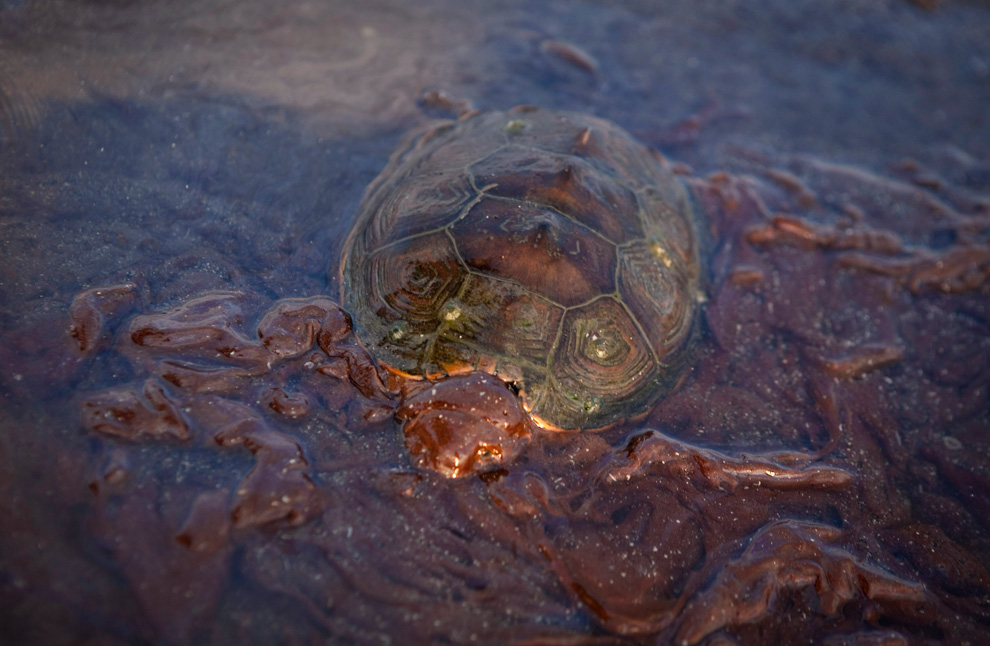
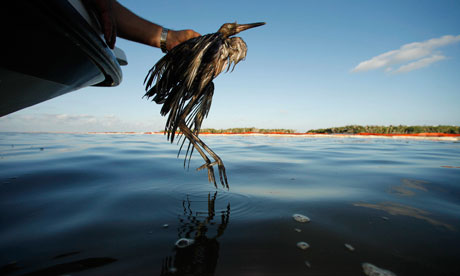
The BP oil spill or Deep Water Horizon spill of 2010 was arguably the worst man made environmental disaster of the last decade if not all of human history. The spill happened when a BP oil rig in the gulf of Mexico exploded, leaking 4.9 million barrels of oil into the gulf over a period of 87 days. This eventually affected about 16,000 miles of coastline. In the first 6 months since the spill over 8000 animals were found dead from the oil, many were on the endangered species list. The oil continued to affect the yearly appearance of shrimp and fish in the gulf even to the current day, though the impact has been lessened by 2014. Many people thinking back to this event probably see the images of black ocean water and sludgy beaches or maybe even the images of poor animals covered in oil confused and scared. In the end this wasn't something BP oil will be living down anytime soon. In fact, at the time many people didn't think the company would be able to live through the event at all. Putting the monetary price of cleaning up their mess aside, how did BP oil still retain enough good press to keep people from boycotting it and ending it right after that terrible event? The answer to that is today’s subject, Public Relations people. Specifically what important points I would choose to emphasize for BP in this crisis had I been called in as a PR person.

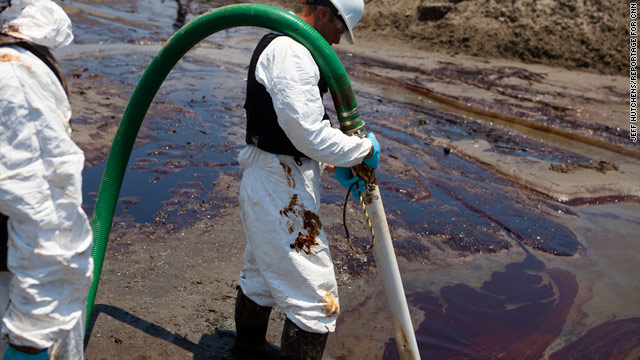
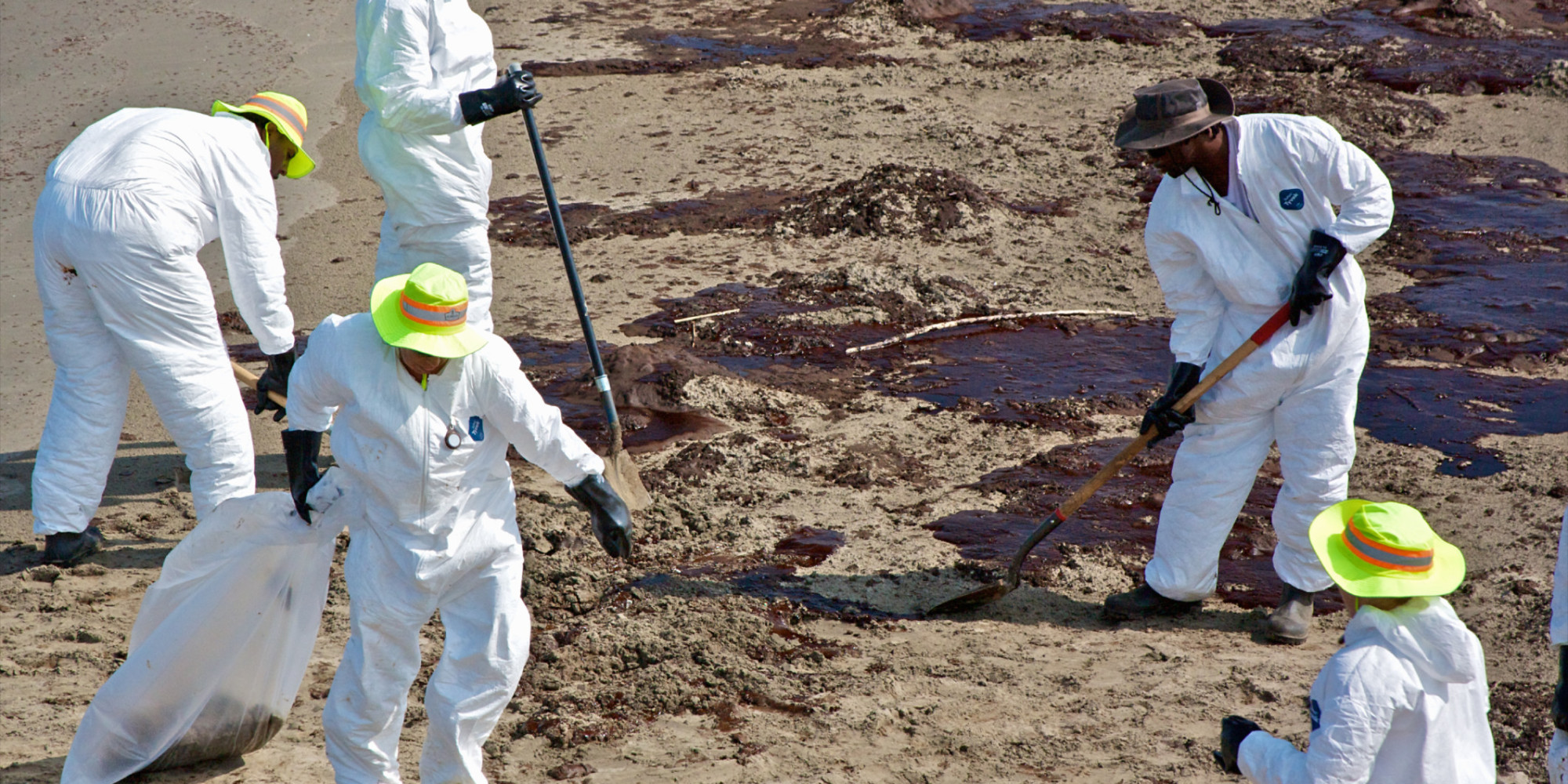
                Public relations people work on a company’s public image to keep it in good standings with their clients. In which case one would think the BP oil spill was probably a near impossible event save the BP oil company from. Even so, it has recovered, or at least survived the spill so they must have had some pretty good PR people. Having seen the extent of damage and read up on the responsibilities of PR people I think I know a few main topics that I think I would have targeted with ads to save BP in the eyes of their clients. First off I would have looked for anything and everything that could be said about what BP oil was doing to fix the oil spill right after it happened, as this would insure the public knew that the company was concerned for the environment and peoples well being and was doing everything in its power to fix it. For this we'd probably use a lot of photography and video of images like the one below. Secondly I’d find what the source of the explosion that caused the spill was and try to make it sound as much like an accident as possible, unless it was very obviously not an accident, in which case we’d need to create a very sincere apology for the world and explain that this outcome was not something the company foresaw.

   In the weeks following the beginning of the oil spill I’d set up extensive add campaigns show casing everything the company was doing, from trying to cap the spill to their cleanup efforts using images like those below. Emphasis would have to be put on every bit of progress made to make sure the public knew that the company was working on the problem. This process would have been crucial at all times during the spill considering the length of time the oil spill was going on for before it was capped.


    Finally once the spill was stopped and cleanup efforts were in full swing at least a few of the people and towns negatively impacted by the oil spill on the coast would have to have reparations made to them. This of course would then be show cased in more ad campaigns to show the good that BP is doing to make up for its mistake. It would not be easy goings for BP and this plan would cost hundreds of thousands if not more but I think it’d be a small price to pay to save the company.

   Quick reminder for readers, none of this is what was necessarily done by BP during the spill crisis, this is only the general plan I think I would use if I was BP’s head PR person during the crisis. Of course I never looked up what they actually did since I feel that would have defeated the purpose of this assignment that I was writing this for. The facts at the beginning are sound though and I will post the link to where I received them below.

Sunday, September 28, 2014

The Social Media Dilemma: Addiction or Past Time

 In today's day in age social media is probably the most viewed type of pages on the Internet next to video pages like you tube and Netflix. I myself only know a handful of people who don’t use some sort of social media, and most of them don’t use it because frankly they never learned to use computers as kids and have a hard time using them now. Many of us wake up to Facebook or Twitter to find out daily news or just to see how friends are doing, then as the day goes on maybe spend our time between classes or work on Tumblr or Instagram looking through post just to burn some time before checking back on Facebook at the end of the day to see whats new. At least, that’s usually how I use my social media, rather heavily I suppose. In any case, recently I was challenged to go 24 hours without social media to see if I could and how it would feel. Honestly I think I may do this anyway some days or at least go close to a day at some points so I didn’t think to much of the challenge but I was somewhat surprised at some points of my day during.
Facebook, and Tumblr are my main social media sites, with some Ifunny every once in a while for laughs. I dislike Instagram and Vine for how immature, sexualized, and down right dumb my generation and below seem on it. Twitter on the other hand I just don’t like anywhere near as much as Facebook, it seems more disconnected. So keeping in mind I only needed to avoid the first 3 sites, my day started out with me resisting checking my Facebook notifications which spent the day flashing at the very top of my phone screen taunting me to log on. Still in the beginning avoiding the 3 sites I use didn’t seem so tough. Around noon that day though, I started to feel it creeping up on me, the boredom. I ran out of stuff to watch on Netflix, I didn't have any video games to occupy me due to having beaten them all, and I was starting to consider logging on and quitting the challenge. In the end though a few of my cousins decided to go to a river nearby to hangout which got me through most of the day. When I got back home I was able to get through the rest of the night just texting with some of the people I usually talk to on Facebook. So in the end it didn’t turn out to be so bad going 24 hours without social media. The following are shots from the river I was at, I thought they looked really nice.


In the end I'm not sure how the experience makes me feel about social media, but I don’t think its as addicting as some people say, at least not to me. The thing is people like stuff that’s fun, and social media may not be laugh out loud rolling on the floor fun, but its an entertaining way to see what your friends and acquaintances are up to and get to some news throughout the day. Plus when you have a schedule like mine, where my friends are either living in other states and countries, or they're busy in school or working when I'm not, social media is a great way to feel like your with them for a while. Mostly I get this feeling through group chatting on Facebook and tagging each other on fun stuff that interests us there or on Tumblr. Sure we could text, or if the time is appropriate Skype, but if you cant meet up, sometimes you cant Skype either, and texting just isn’t as expressive as Facebook is honestly. But if you have the chance to see your friends in real life, or if you can get out of the house and do anything fun with anyone you like I think social media becomes redundant, like it was when I was at the river. It just depends on whether you can do something else to occupy yourself more enjoyably than being online, and if you cant I don't think theirs anything wrong with spending a day on a social media site, or even a few days. It's all about balancing out your life and time, if you feel like social media is the only fun thing you can do or the only place you know people, than you might have bigger issues in your life than just a social media addiction.


Saturday, September 13, 2014

Photography in the Current Media


    In our current day and age visual media is something we are bombarded with on a daily basis. When you wake up in the morning you might turn on your phone or your TV and read articles or watch a morning news show to get the latest, up to date news. In the afternoon when your home you might watch TV which is just a portal into a world of visual media, or maybe read a magazine or newspaper online full of pictures of your favorite topics. Maybe you will go watch a movie and while you watch it you may not even notice this as a form of visual media as well. Visual media is everywhere, photography being one the oldest, followed by movies and then TV. All of these forms are important in furthering cultural transmission, or conveying beliefs, ideas, values, and practices of a culture. More importantly though they also serve surveillance purposes, meaning they lend credibility to the stories we see and hear. As technology improves though, are some of these forms of visual media becoming obsolete? With the advent and progress of video and film technology that can capture entire worlds at a time, is photography, which can only capture a single scene in any given photo, falling behind in usefulness? In my opinion, I would say no.

   It is true that video and film can capture enormous slices of life between their recording length and the sound they capture, but sometimes this can be more of a curse than a blessing. A photo of a sunrise at just the right moment and angle can portray immense beauty and pleasure in a viewer, but if you used a camera to film the suns decent from when it begins to fall till when it disappears, you get a long boring video of the sky that will most likely bore the viewer before they hit the magic moment in which the photograph quickly expressed. In other situations filming an entire event may not be allowed or might be frowned upon, in which case photography is a quick and discreet way to capture a moment. The main advantage of photography is its ability to capture a single moment that is the peak of emotion, and that will be able to convey these emotions quickly and efficiently to the photos audience. Famous photography like the ones below prove this point, and I think proves the worth of a photograph over a video in certain situations.
The Most Beautiful Suicide
Edward Abbey- Landscape,  Time Magazine

Great Depression photography
   Their is one more reason that I believe photography is far from obsolete in the media. Sadly this isn't a good reason or one to be proud of. In the media, often the truth is not king when trying to get information out to people. Sometimes the truth is distorted to show a reality somewhat different from what real reality is, all in an effort to sow the seeds of a certain emotion in viewers. I do not mean to say this is right or just or even that it happens all that commonly, but I do believe it is something that really happens and that some higher ups in media abuse in order to meet their own ends. Photography is the easiest form of media to manipulate in this way, whether through cropping or photoshop, a picture is a medium that depending on its source may not always be a good idea to take at face value. Because of photography's easy malleability though, I feel it will stay in social, and especially news media for a long time.


Tuesday, August 26, 2014

Print Media to the Future!


Print media has had an enormous impact on our intellectual culture ever since Johannes Gutenberg created the first mechanical printing press and published the first copy of the Gutenberg Bible in 1455. Ever since then print media has become an essential cultural tool that has allowed information to cleanly travel through the ages without having to rely on hazy and forgetful word of mouth. That being said, today even as digital formats become all the more common around the world, print media is still essential and very popular as each year more print media is released and helps shape people’s perceptions and experiences of the world around them. In this sense print media can define key aspects of the generation they appear in. If by some chance we were able to travel forward in time, say 150 years or so, and wanted to take a bit of the past with us to share with the future about our time, some printed media would be an excellent choice to do so. And that brings me to today’s topic, if I could go into the future like I have just said, and take only 3 objects of print media, what would they be and why?


                First object I would take is one well known in the first decade of the 2000’s, a copy of the Deathly Hollows, book 6 of the Harry Potter series. Now why would I take this book you might ask? It’s not because it was my favorite series or even my favorite book in the series. Harry Potter is a character everyone in my generation knows. Whether the read the books or not, you have heard about him and maybe even seen the movies. Anybody you ask will be able to give you even just the slightest bit of knowledge on who Harry Potter is and whether the series was good or not. The series may never become classic literature, or it might, either way no one can deny that it was a very big phenomenon of our generation and has shaped many people’s perceptions of good literature in our time.


                The next object of print media I’d take is book 1 of Naruto. I’m not a huge fan of Naruto, I prefer One Piece or FairyTail honestly, but I have kept up with the story over the years. The way I see it a lot of people in our generation have begun to enjoy many creations from outside countries as media becomes more easily accessible. The fact that Japanese Manga’s and Animes have done so well in the American market and are growing still is proof that we are becoming worldlier and that we are being affected and shaped by media from even outside our culture. Naruto is another character that not everyone may follow in his story but has become well known enough for most Americans below 30 or 40 to at least recognize his name. This alone I think makes it relevant enough to take and share with the future, and compare it to see how much outside media is enjoyed then compared to now.

                For my last piece of print media I’d Take the latest edition of the New York Times. Newspapers are print media too and are very important sources of worldly information as long as you don’t take everything at face value. They are good for at least realizing what is happening throughout our world recently and because of that, would be a treasure to take to the future. It would be like getting an almost firsthand view to the events of the past without the usual distortions information might receive over 150 years. I’m sure someone in the future would find what’s going on here today interesting as it would be a firsthand account, something they would never see in their accounts of the past. Unless they already had a copy of course.